
Many business reports arrive after the work is done: yesterday's sales, orders shipped, calls answered or warehouse activity. They help explain what happened, but they arrive too late to guide decisions during that day.
A live dashboard shows the numbers while there is still time to respond. Our Warehouse Activity dashboard is one example, but the same principle applies wherever you need to follow work as it happens.
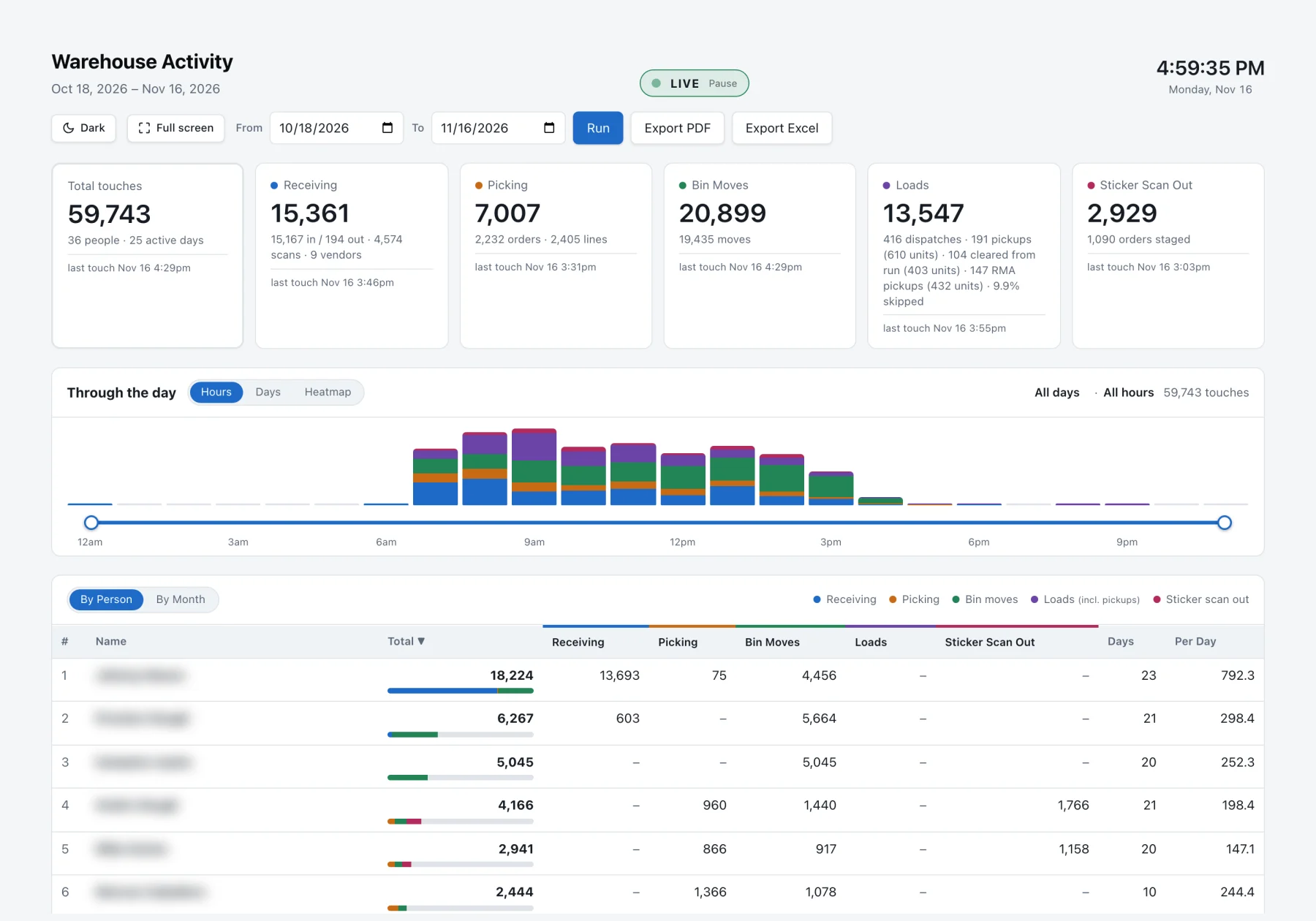
Act while it still matters
If picking falls behind at ten o'clock, knowing then gives you time to investigate and, if needed, move someone over from receiving. If orders slow after lunch, you can look into it that afternoon rather than discover it in tomorrow's report.
Over time, the view also helps you recognize patterns. You learn when activity usually builds and tapers off, making an unusual gap easier to spot. A quiet hour is a reason to ask questions, though; the chart alone cannot tell you why it happened.
See the day, then look closer
Our dashboard brings receiving, picking, bin movements and loading into one view. Summary cards show totals, a timeline shows when the work happened, and tables break it down by person or month. Hours, days and a heatmap offer different ways to explore the same activity.
When you are watching the day unfold, live updates help you keep track. When you need to compare figures or investigate a question, pause the view so the numbers stay still. The dashboard should make it clear which mode you are in.
How to judge any live dashboard
Whether you are considering ours or another dashboard, try these checks with your own data:
- How current is it? Record an order, pick or other activity and check how long it takes to appear; look for a clear live or paused status.
- Can you narrow it down? Select a shorter period and inspect the people or activities behind a total.
- Can you hold it still? Pause the figures long enough to compare them or discuss them with someone.
- Does it handle a busy period? Try a full month of real activity, including your busiest days.
- Do the totals match what happened? Check a few known records against the report before relying on it.